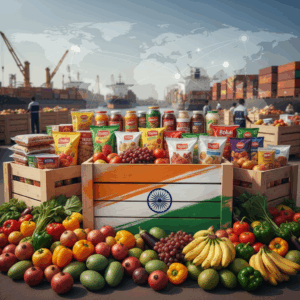
COO – Global System of Trade Preferences (GSTP): Expanding Access for Developing Economies
Introduction
South-South trade is increasingly recognized as a strategic driver for global economic resilience and inclusive growth. The Global System of Trade Preferences among Developing Countries (GSTP) is a groundbreaking multilateral arrangement designed to promote economic cooperation and mutual market access among developing nations. Central to utilizing these preferential tariffs is the Certificate of Origin (COO)—a document that proves eligibility for reduced duties. This blog unpacks the GSTP framework, explains what the COO is and why it matters, discusses its benefits, exposes key challenges, and offers guidance for exporters looking to leverage this system.
What is GSTP and COO?
Global System of Trade Preferences (GSTP)
The GSTP is a preferential trade agreement initiated by the United Nations Conference on Trade and Development (UNCTAD) and signed in 1988—officially operational since 1989—with 42 member nations including India, several African, Asian, and Latin American countries.
- Objectives: Promote and sustain mutual trade; foster South-South economic cooperation; stimulate development; diversify export markets away from reliance on developed nations.
- Key Features: Preferential tariff reductions (negotiated product-by-product at different rounds), para-tariffs and non-tariff measures, sectoral agreements, direct trade measures.
- Institutional Framework: The Committee of Participants (COP) oversees GSTP; UNCTAD provides technical support for negotiations and implementation.
- Scope: In 2018, GSTP economies represented a $14 trillion market, accounting for about 20% of world import demand and demonstrating robust growth for developing countries.
Certificate of Origin (COO) under GSTP
A Certificate of Origin (COO) is a government-issued document certifying that exported goods meet GSTP’s “rules of origin” requirements, qualifying them for preferential tariffs in participating countries.
- Authorised Agencies: In India, the Export Inspection Council (EIC) is the principal agency for most goods; MPEDA issues for marine products, the Tobacco Board for tobacco products.
- Rules of Origin: Only goods “wholly obtained” or with at least 50% value content from origin countries qualify. Products must be consigned directly and satisfy specific conditions to gain tariff preferences under GSTP.
- Format & Application: Exporters must apply through authorised agencies, providing details of production, invoice, shipping bill, and proof of value addition (where applicable). The process involves verification of documents, product classification, and sometimes physical inspection.
Why the COO under GSTP is Necessary
Claiming Preferential Tariffs
The GSTP COO is absolutely essential for exporters to access negotiated tariff concessions. Customs officers use the COO to determine the status of “originating goods” and thereby apply lower or zero tariffs bargained under GSTP rounds.
Regulatory Compliance
Without a valid COO, customs authorities revert to standard (higher) tariffs, negating the benefits of GSTP membership. COOs act as legal documents proving compliance and eligibility for duty concessions.
Protection Against Trade Fraud
COOs prevent trade diversion and fraudulent claims by verifying the value content and country of manufacture, ensuring that reduced tariffs benefit only legitimate exporters in member countries.
Expanding Export Opportunities
Having a GSTP COO allows Indian exporters to access new, often less saturated markets in Africa, Asia and Latin America, reducing dependence on traditional Western markets and thus mitigating export risks.
Key Benefits of GSTP and COO
Enhanced Market Access for Developing Countries
GSTP offers expanded and easier market entry for goods among member nations, benefitting MSMEs, agriculture, textiles, industrial goods, and several niche sectors.
Diversification of Export Destinations
Exporters can target new regions beyond the US, EU or other developed economies, lowering vulnerability to trade shocks or policy changes elsewhere.
South-South Economic Cooperation
GSTP fosters economic ties, knowledge-sharing, and investment among the Global South, strengthening intra-regional value chains and enabling collective growth.
Competitiveness Improvements
Preferential tariffs allow exporters to price their goods more competitively. Local producers also gain incentives to upgrade manufacturing, improve quality, and meet standards.
SME Empowerment
Lower tariffs and reduced barriers provide smaller firms better access to foreign markets, helping them scale exports and grow internationally.
Support for Industrialization
GSTP encourages manufacturers to expand capacity, invest in new technologies, and diversify product lines in response to increased demand from member countries.
Challenges in COO Issuance and Implementation
Limited Product Coverage and Tariff Depth
GSTP negotiations have so far produced less comprehensive concessions than most modern FTAs. Only specified products benefit, and reductions are often shallow compared to other agreements.
Rules of Origin Complexity
The requirement to prove “wholly obtained” or up to 50% local value addition can be burdensome. Arranging and verifying cost sheets, maintaining records for five years, and getting documentation certified slows down processing.
Mistakes or incomplete documentation may result in denial of COO or delays at customs.
Administrative and Regulatory Barriers
Physical verification of goods, rigid documentation, and sometimes inconsistent interpretation by customs officers make the issuing process time-consuming and unpredictable, particularly for new exporters.
Coordination Issues Among Agencies
Not all issuing agencies have fully digitized processes or harmonized formats, leading to confusion and increasing the risk of error.
Political and Economic Asymmetries
Member states have different economic strengths and trade priorities, which can slow down tariff harmonization, implementation, and dispute resolution within GSTP.
Competition from Developed Countries
Although GSTP aims to reduce dependence on developed markets, member economies still remain exposed to competition from developed nations with stronger technologies and larger capital bases.
Conclusion
The Certificate of Origin (COO) under the Global System of Trade Preferences (GSTP) is the fundamental tool for exporters to unlock tariff concessions and foster South-South economic partnership. For Indian businesses, participation in GSTP means expanded market opportunities, export diversification, and stronger regional integration.
While GSTP COO offers promising benefits, exporters must navigate complex rules of origin, administrative hurdles, and limited product coverage. The path to maximizing these benefits requires strategic planning, meticulous documentation, vigilance on country-specific regulations, and frequent engagement with authorized agencies like the EIC.
Taking full advantage of GSTP is not only about compliance—it’s about forging new commercial relationships, reducing export risks, and contributing to a more equitably distributed global economic order.
Recent Post