COO – India-Thailand Early Harvest Scheme (EHS): Unlocking Trade Opportunities
Introduction
India and Thailand, two vibrant economies in Asia, have strengthened their trade relations through various agreements. The India-Thailand Early Harvest Scheme (EHS), signed in April 2003, was the first step towards a comprehensive Free Trade Agreement, designed to facilitate tariff concessions on selected products to accelerate bilateral trade growth.
Crucial for businesses to avail of these tariff benefits is the Certificate of Origin (COO) — a document certifying that goods originate in the exporting country and qualify under the EHS rules for preferential treatment. This blog delves into the India-Thailand EHS, elaborates on the necessity and benefits of COO, discusses common challenges exporters face, and emphasizes how businesses can leverage this scheme effectively.
What is India-Thailand Early Harvest Scheme and COO?
India-Thailand Early Harvest Scheme (EHS)
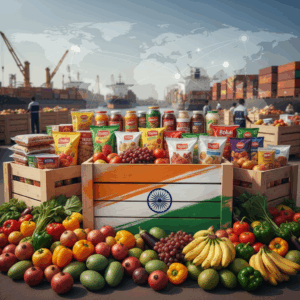
The EHS is a trade facilitation mechanism aimed at accelerating trade in goods while paving the way for a comprehensive bilateral Free Trade Agreement. It covers roughly 82 tariff lines including agricultural products, chemicals, machinery, electronics, textiles, and metals where customs duties are reduced or eliminated.
The scheme offers preferential tariffs on these products without going through the lengthy FTA process, encouraging greater trade volume and cooperation.
Certificate of Origin (COO) under India-Thailand EHS
The Certificate of Origin (COO) is an official document issued by authorized agencies — such as the Directorate General of Foreign Trade (DGFT) and affiliated Export Inspection Agencies (EIA) in India — confirming that goods exported to Thailand meet origin criteria laid out in the EHS.
- The COO demonstrates compliance with origin rules that products are wholly obtained, produced, or have undergone sufficient transformation in the exporting country.
- Only shipments accompanied by a valid COO are eligible for reduced or zero customs duties at the Thailand border.
- COO must be filed alongside customs declaration at import, certifying the authenticity of the export claim.
Why is COO Necessary under the India-Thailand EHS?
Securing Preferential Customs Tariffs
Without a validated COO, shipments risk attracting full customs duties, eliminating the financial advantage provided by the treaty. Customs authorities require COO to verify product eligibility for tariff concessions.
Regulatory and Trade Compliance
The COO emphasizes transparency and compliance with agreed rules of origin, helping prevent circumvention of duties through country-hopping or mislabeling.
Improving Export Efficiency
Timely issuance and presentation of COO streamline customs clearance and reduce delays or additional scrutiny, which is essential especially for time-sensitive goods.
Enhancing Exporter & Importer Credibility
Holding a COO under EHS signals adherence to international trade practices, improving trust with overseas buyers and lenders.
Benefits of the Early Harvest Scheme and COO
Expanded Market Access with Reduced Tariffs
Indian exporters benefit from reduced or eliminated duties on more than 80 products, increasing competitiveness in Thailand’s market which is a gateway to ASEAN.
Trade Growth Potential
The scheme encourages export diversification and increased bilateral trade volume by lowering tariffs on key items such as spices, chemicals, electronics, and textiles.
Cost Savings and Better Margins
Tariff concessions translate directly to reduced landed cost, enhancing profitability and the ability to price competitively.
Simplified Customs Procedures
Digitally accepted COOs and clear rules facilitate smoother customs processes for faster clearance of goods.
Support for Exporters via Government Agencies
Authorities provide guidance on COO issuance, origin rules, and compliance enhancing exporters’ ability to utilize EHS benefits effectively.
Foundation for Comprehensive Trade Partnership
EHS builds trust and economic interconnectivity, laying the groundwork for future comprehensive India-Thailand Free Trade Agreement.
Challenges in COO Issuance under India-Thailand EHS
Understanding and Applying Rules of Origin
Determining if goods satisfy origin criteria can be complex due to product-specific rules including minimum local value addition or change in tariff classification.
Documentation Procedures
Exporters must prepare extensive documentation such as invoices, shipping bills, packing lists, and production details to support COO issuance, which can be overwhelming, especially for SMEs.
Timely Issuance and Renewals
Delays in obtaining COO or failure to renew trade licenses and related certificates on time can lead to missed tariff benefits.
Awareness and Training
Lack of widespread knowledge regarding COO application and compliance among small exporters can limit the scheme’s reach.
Customs Verification and Audits
Importing customs may perform audits or require additional documentary proof even with COO, introducing clearance uncertainty and delays.
Conclusion
The Certificate of Origin (COO) under the India-Thailand Early Harvest Scheme (EHS) is a crucial enabler allowing exporters to access tariff concessions, streamline customs clearance, and enhance competitiveness in the growing Indian-Thai trade corridor.
While challenges related to rules of origin complexity, documentation, and awareness exist, strategic management of COO application and compliance unlock significant economic opportunities.
Indian exporters are encouraged to understand COO requirements, leverage government support mechanisms, and utilize the EHS benefits fully, thereby fostering stronger bilateral trade and positioning for future comprehensive trade agreements.
Recent Post